Date: 1 April 2026
Venue: Darlin Sofola Cinnamon Centre
Partnership School: Zumaratul Ismalimillah High School
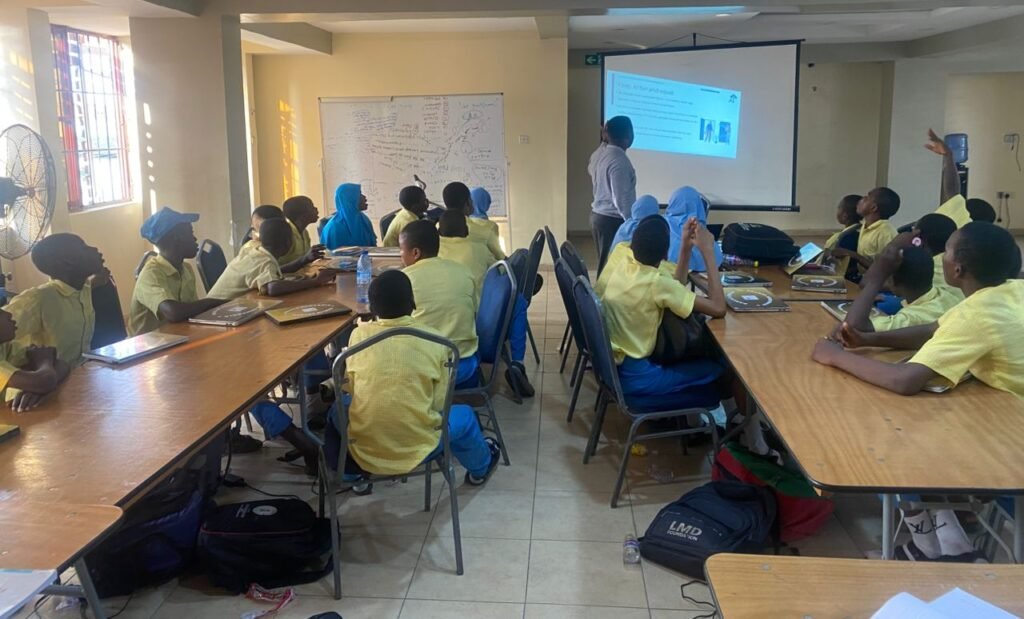
The AI Literacy outreach session, delivered by the AI4AI team in partnership with Zumaratul Ismalimillah High School at the Darlin Sofola Cinnamon Centre, successfully introduced a total of 22 secondary school students to the foundations of Artificial Intelligence and the principles of responsible and ethical AI use. The session demonstrated strong engagement, with most participants being male students. The class included both male and female learners, with a gender distribution of 17 male students (77.27%) and 5 female students (22.73%).
The interactive workshop combines core AI concepts, real-life applications, hands-on activities, and meaningful ethical discussions to build critical thinking and digital responsibility in a warm, engaging environment.
The session began with friendly introductions and a pre-session form. It was facilitated entirely by the AI4AI team and maintained a lively, student-centered atmosphere throughout. Students showed strong curiosity, active participation, and a genuine eagerness to understand both the power and the responsibility that comes with AI.
Pre-Session
The program opened with warm introductions and familiarization, followed by the distribution of the AI literacy survey. This essential step allowed the facilitators to establish a baseline understanding of the students’ current knowledge of Artificial Intelligence and tailor the content to their needs and interests.
AI Literacy Session
The core presentation kicked off with a clear and relatable introduction covering:
- What Artificial Intelligence (AI) is
- The mission and work of AI4AI
- Simple, everyday explanations of AI
Students were warmly invited to share their own understanding and previous experiences with AI tools. The mixed levels of knowledge in the room created an immediate spark of curiosity and set a highly engaging tone for the rest of the workshop.
AI Around Us
Participants explored how AI is already part of their everyday lives, from school tools to the apps they use daily. This segment transformed AI from an abstract idea into a familiar and tangible reality. Students eagerly shared examples of AI tools they knew and had used, sparking a lively and highly relatable discussion.
Responsible Use of AI
A strong emphasis was placed on responsible AI engagement. The core message was:
“AI should support learning, not replace thinking, and students must remain in control.”
Facilitators highlighted the importance of using AI in ways that cause no harm, protect the environment, and serve academic and personal growth. Students were encouraged to see themselves as responsible digital citizens who understand the “why” behind AI, not just the “how.”
AI Activity
Students participated in a hands-on exercise using Google’s QuickDraw (https://quickdraw.withgoogle.com). This practical activity clearly demonstrated how AI systems recognise patterns and learn from user input, making the learning experience both fun and memorable.
Understanding Generative AI
The session introduced Generative AI, covering:
- What it is
- Different forms (text, images, etc.)
- How tools like ChatGPT and similar platforms work
Many students were already familiar with these tools and actively shared their experiences, making the segment highly interactive.
Further Focus on AI Ethics
Key topics covered included:
- Responsible AI usage
- Academic honesty
- Bias and misinformation
- Knowing the “why” behind AI, not just the “how”
Students were reminded of their responsibility to the world they live in, to use and create with AI without bias and always for good, whether as users or future creators of technology.
Questions & Post-Session Survey
The session concluded with an open Q&A segment, giving students the opportunity to ask questions and express their thoughts. A brief recap of the day’s key takeaways was provided, followed by the AI Assessment survey to capture learning outcomes and shifts in perspective.
Challenges & Learning
The session was highly impactful and flowed smoothly overall. The only notable challenge was an internet connectivity issue that temporarily limited smooth engagement with the online AI activity. The team adapted quickly, keeping the energy high through discussion and alternative examples.
Conclusion
The outreach session was insightful and engaging for the learners. It left them not only more aware of what AI can empower them to do, but also with a strong sense of the ethical responsibility that comes with using and creating AI. Students departed feeling equipped to engage with technology thoughtfully and for the greater good.
With continued student enthusiasm and minor improvements in technical preparation, future sessions will be even more seamless and impactful. The day once again proved the power of AI literacy workshops to inspire responsible innovation among young minds.