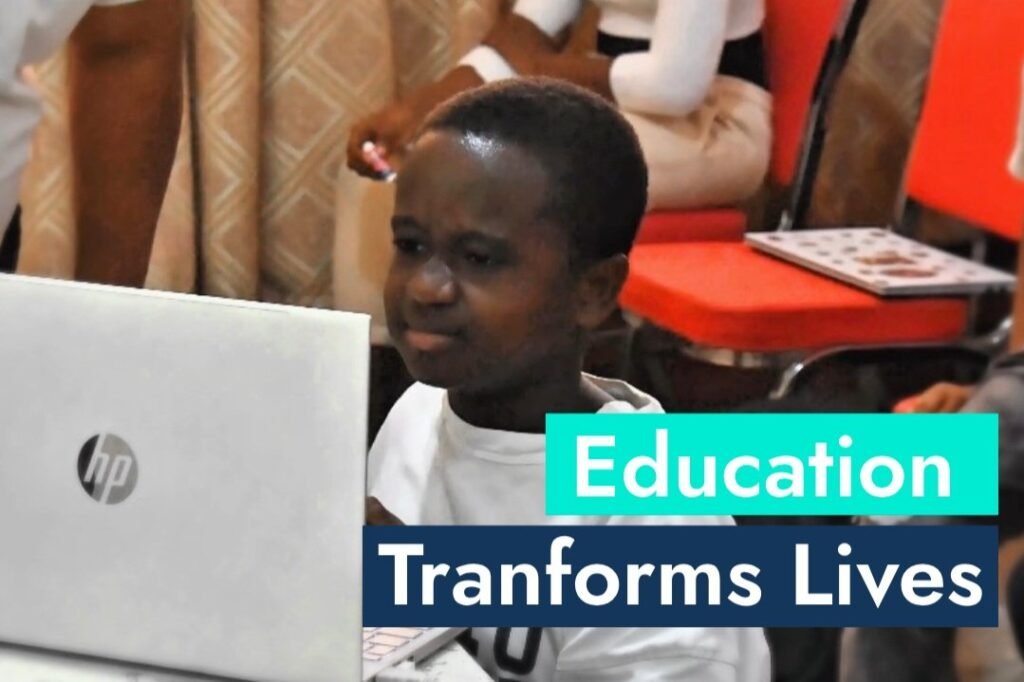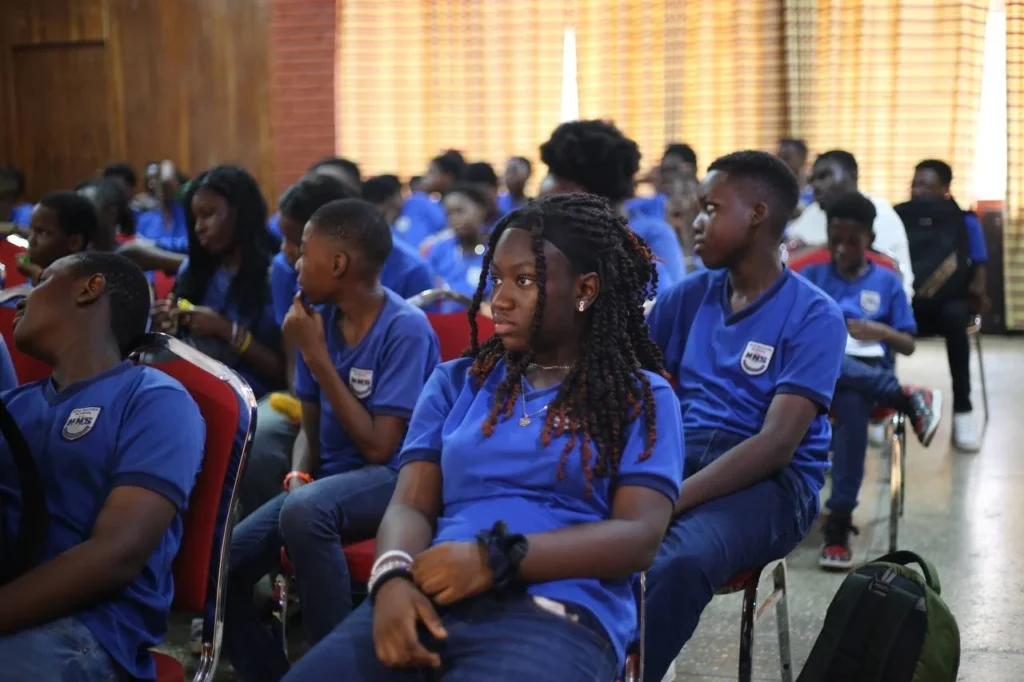
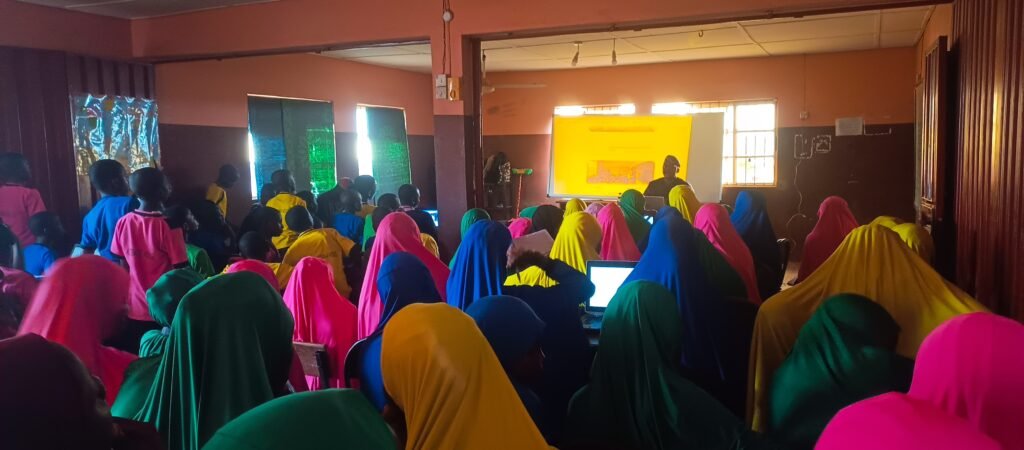
On July 29, 2026, we conducted an intensive AI Literacy Outreach at Noble Foundation Schools in Iyana Agbala, New Ife Rd, Ibadan, Oyo State, Nigeria. Designed to bridge significant technological gaps in an under-resourced learning environment, our mission was to introduce 100 secondary school students to AI fundamentals, hands-on prompt creation, and responsible digital engagement.
Key Highlights & Core Curriculum
- AI Fundamentals: We examined what Artificial Intelligence is and how it works, advancing SDG 4 (Quality Education) and SDG 10 (Reduced Inequalities).
- Prompt Engineering: Students learned a 5-step model: clearly stating objectives, providing context, specifying desired output formats (lists, essays, summary tables), giving examples, and refining prompts when initial outputs are insufficient.
- Principles of Responsible AI: We led focused discussions on digital safety, bias, identifying AI hallucinations, and avoiding over-reliance on automated tools.
- Practical Lab & Critique: Working in small teams, students used AI tools to break down complex academic topics into clear, easy-to-understand explanations and brainstorm solutions for local school issues, while evaluating responses to spot inaccuracies and reinforce human verification.
Impact & Survey Outcomes
Evaluating a representative sample of 23 students (n = 23) through a post-outreach feedback questionnaire reflected remarkable enthusiasm and skill acquisition:
- 100% Satisfaction & Operational Comfort: 100% of surveyed participants reported feeling comfortable operating AI systems, recorded overall session satisfaction, expressed excitement about AI’s potential, and affirmed a willingness to dedicate personal time to learning generative AI.
- High Relevance & Academic Value: 96.66% of surveyed students agreed that applying AI tools would make their academic studies more engaging and enjoyable, while 95.65% rated the workshop content as highly useful.
Qualitative Student Feedback
“Learning how AI processes human instructions and data showed me that it relies completely on how we guide it. Understanding how it works made me realize that AI is a tool we control, and it’s only as good as the prompts we write!”
Key Operational Insight
Operating with severe hardware limitations, managing 100 students across just 6 available laptops required small-group rotations to ensure every student received hands-on keyboard time. Because students presented low baseline digital literacy, facilitators provided step-by-step guidance for basic device navigation while maintaining equal representation of male and female students across all rotations to support less confident learners.