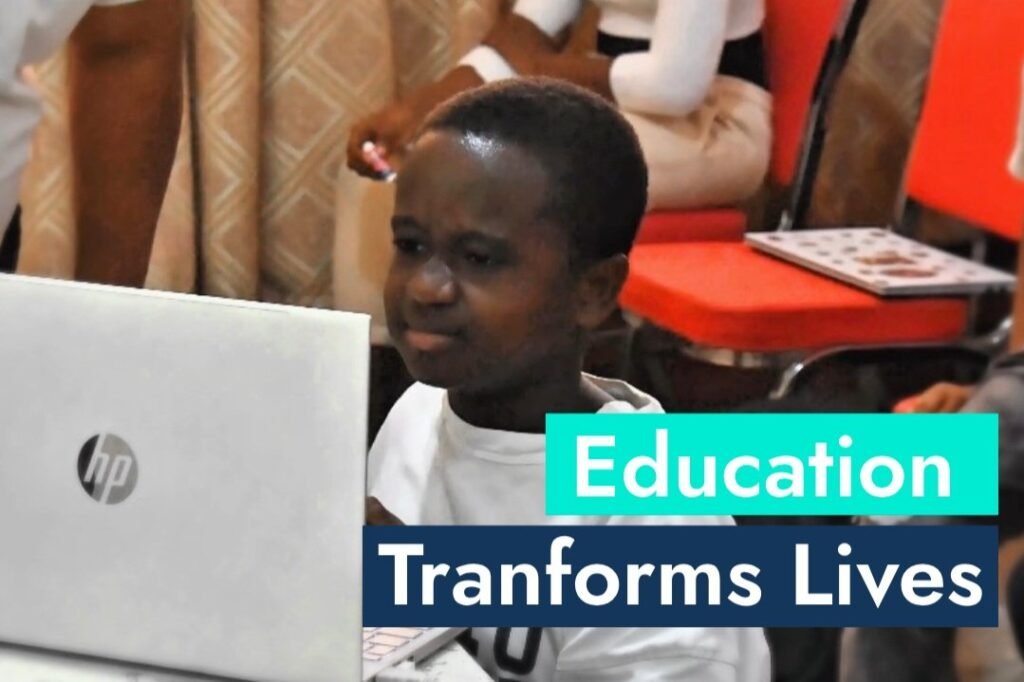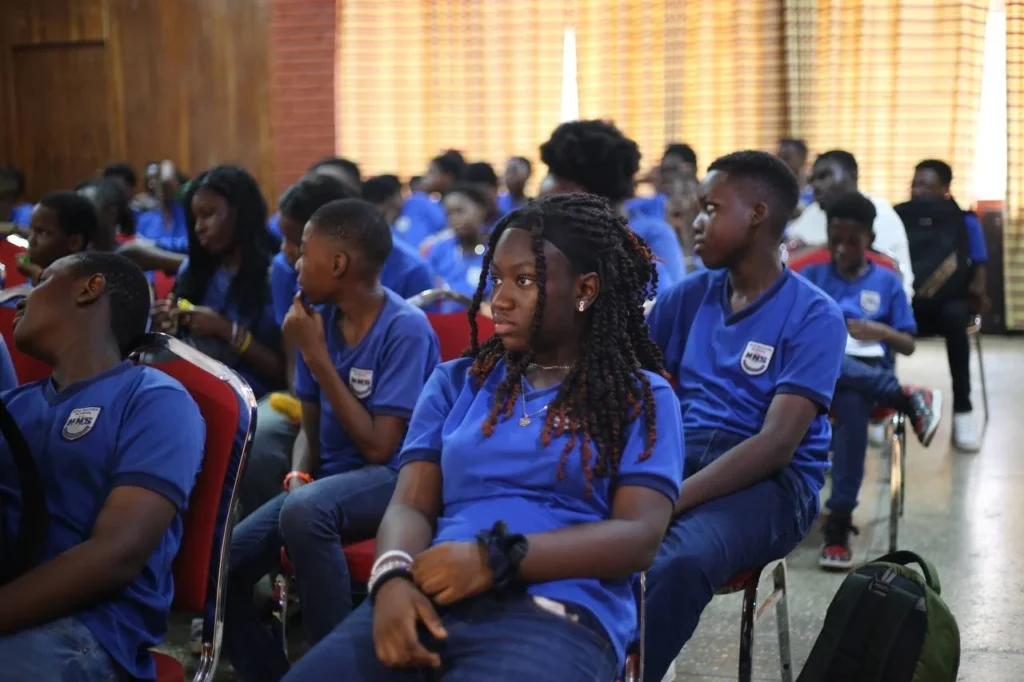
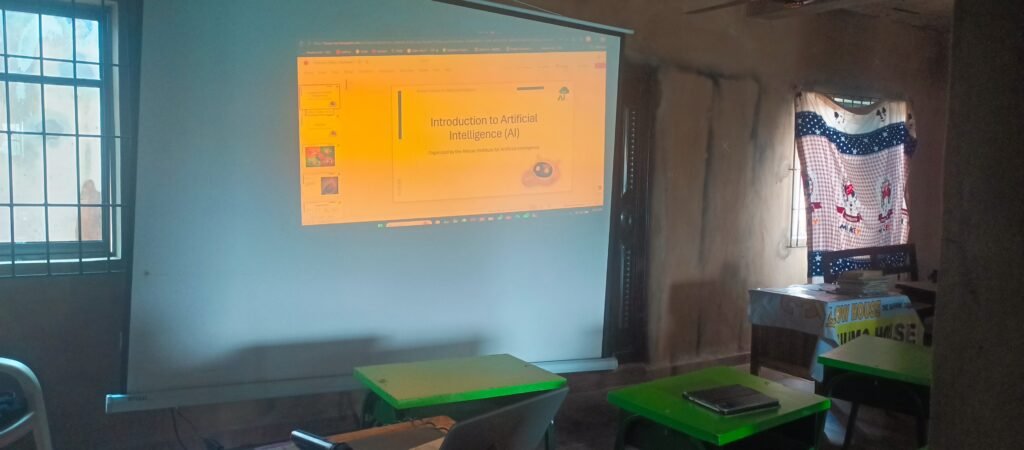
On July 24, 2026, we conducted an AI Literacy Outreach at Caliphs School, located in the Omolayo area of Ibadan, Oyo State, Nigeria. The session brought together 62 secondary school students to introduce foundational AI concepts, practical prompt engineering techniques, and principles of ethical technology usage, helping young learners transition from passive observers to informed digital creators.
Key Highlights & Core Curriculum
- AI Fundamentals: We explored fundamental AI concepts, breaking down what AI is and how it functions under the hood, directly advancing SDG 4 (Quality Education) and SDG 9 (Industry, Innovation, and Infrastructure).
- Prompt Engineering: Students received direct instruction on a structured 5-step prompting framework: clearly stating objectives, providing context, specifying desired output formats, including examples, and refining prompts if the initial response is inadequate.
- Responsible Innovation: We held interactive discussions on responsible AI, examining bias, data privacy, misinformation, and the critical role of human oversight.
- Practical Lab & Critique: Guided by the prompt framework, students instructed generative tools to summarize challenging topics into structured revision notes, while also evaluating AI-generated outputs for inaccuracies and missing context.
Impact & Assessment Outcomes
To assess knowledge retention, conceptual understanding, and prompt construction skills post-training, an assessment quiz was administered to a sample cohort of 22 students (n = 22):
- Demonstrated Learning Acquisition: The representative sample of 22 participants successfully demonstrated mastery of core concepts and prompt construction logic on the post-outreach quiz.
- High Classroom Engagement: Facilitator observations recorded strong classroom participation, active engagement during prompt construction drills, and enthusiastic involvement in group problem-solving exercises across all 62 attendees.
Qualitative Student Feedback
“I will use generative AI to keep learning my school work in simple ways so I can understand difficult topics.”
Key Operational Insight
Male and female students participated with equal enthusiasm across all discussion modules and practical exercises, displaying strong gender equity. Collaborative peer-supported group exercises helped bridge varying levels of baseline digital familiarity among participants. To ensure long-term impact, we recommend building institutional infrastructure partnerships with local stakeholders to enhance school technology resources for sustained learning.