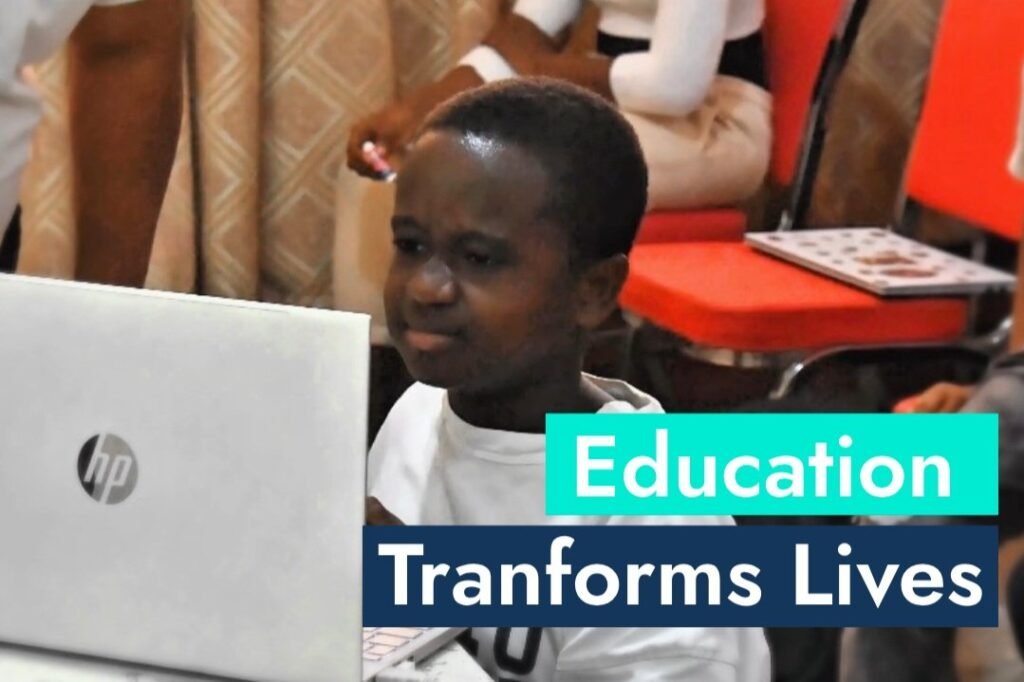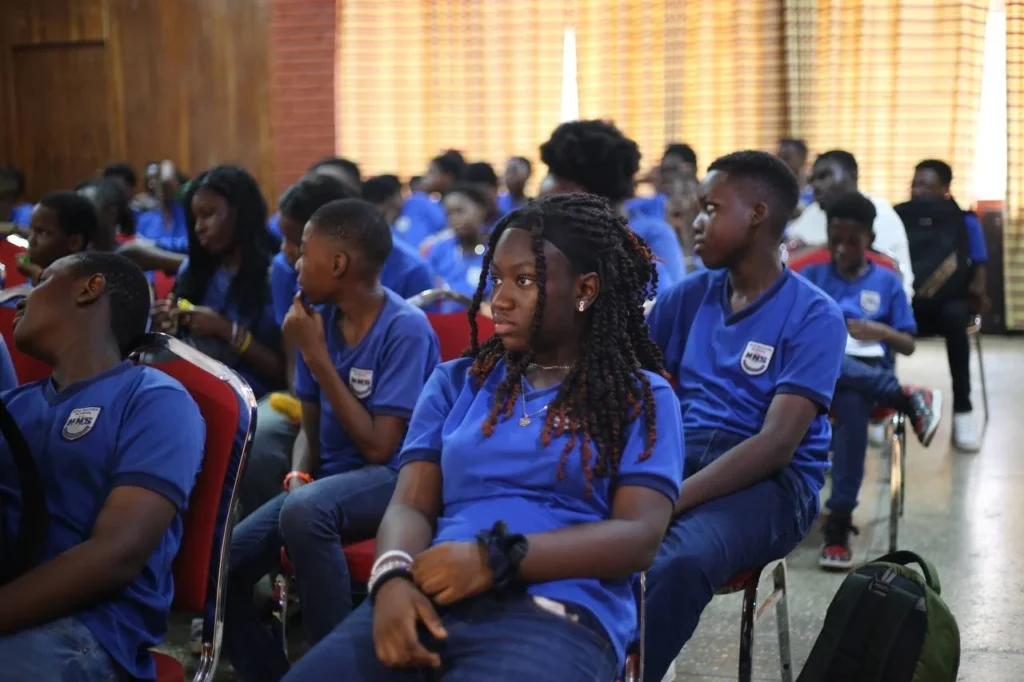
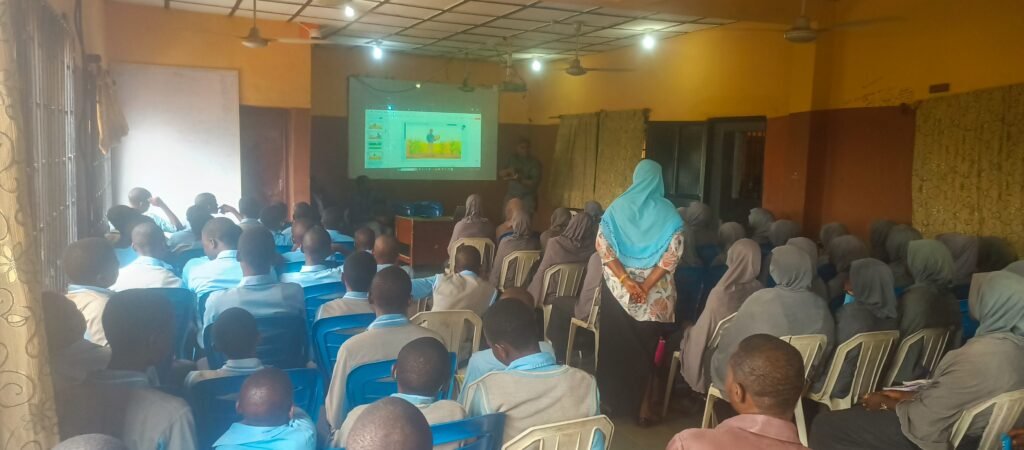
On July 21, 2026, we brought our AI Literacy Outreach to 105 secondary school students at Qiblah High School, located in the Aleshinloye area of Ibadan, Oyo State, Nigeria. Designed to bridge the digital divide in underserved educational settings, our mission was to introduce students to AI concepts and equip them with practical skills to solve community challenges.
Key Highlights & Core Curriculum
- Introduction to AI: We explained in simple terms what AI is and how AI works, directly supporting SDG 4 (Quality Education) and SDG 9 (Industry, Innovation, and Infrastructure).
- Prompt Engineering: Students mastered a 5-step framework: clearly stating the objective, providing background context, specifying output formats, giving examples, and reviewing/adjusting instructions for refined responses.
- Responsible Innovation: Storytelling was used to unpack the five core principles of responsible AI usage.
- Practical Lab & Critique: Guided by the prompt framework, students generated custom examination study guides and analyzed sample images to spot AI hallucinations and factual errors, building critical output evaluation skills.
Impact & Survey Outcomes
Evaluating a representative cohort of 20 students (approx. 20% of total attendance) yielded a 100% positive response rate across all key indicators:
- 100% Satisfaction & Operational Comfort: 100% of surveyed students expressed overall session satisfaction, reported feeling comfortable using generative AI tools, rated the curriculum as directly useful, and committed personal time to continued AI learning.
- 100% Future Optimism & Academic Value: 100% of participants expressed optimism regarding AI’s societal potential and agreed that applying AI techniques makes daily study sessions more effective and engaging.
Qualitative Student Feedback
“Before today, I used to think AI was like magic that just knew everything on its own. Now I understand that it processes a lot of data and patterns to generate answers based on how we guide it.”
Key Operational Insight
While female students demonstrated equal enthusiasm and participation as male students during the practical exercises, facilitators noted varying levels of device confidence when transitioning from smartphone usage to desktop computers due to the limited number of computers available at the school. Moving forward, we recommend maintaining equal-gender pairing strategies for group exercises and providing supplementary device orientation for students with lower baseline access.