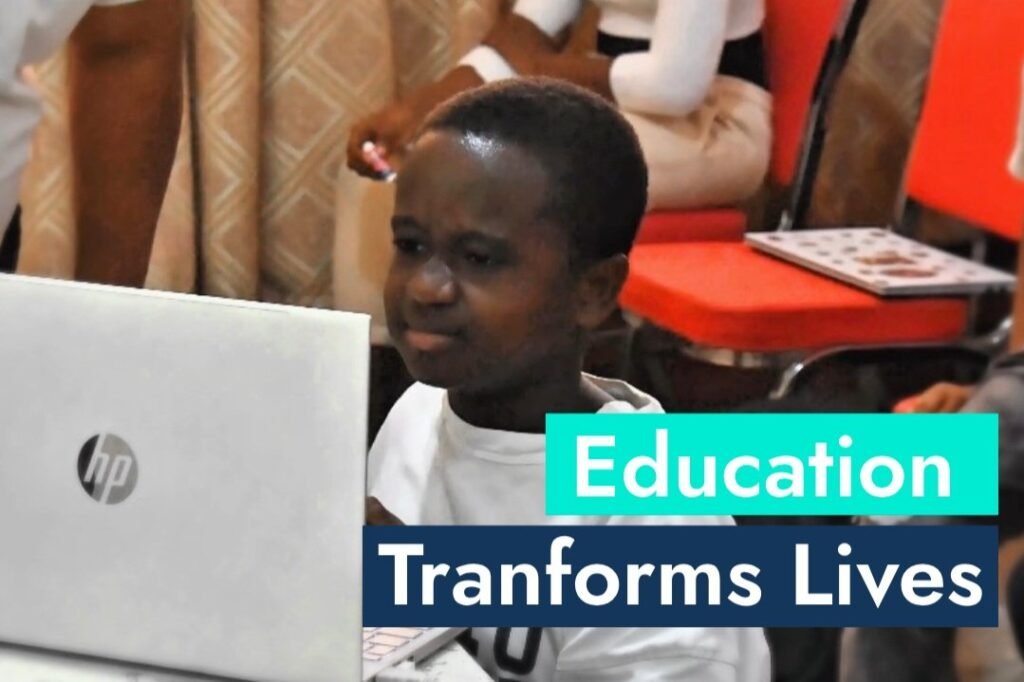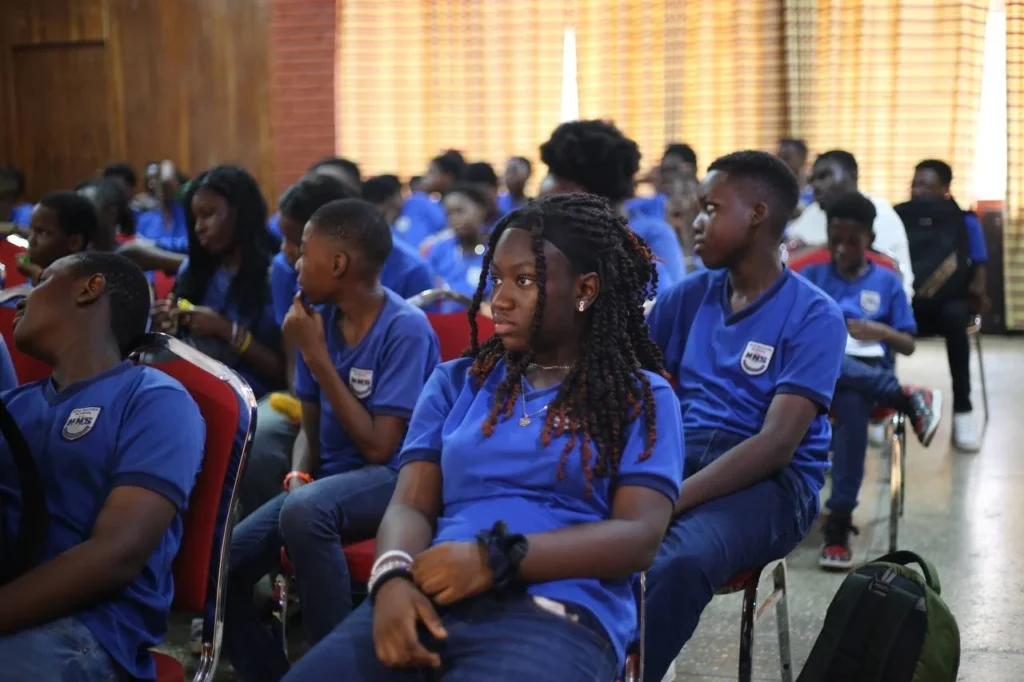
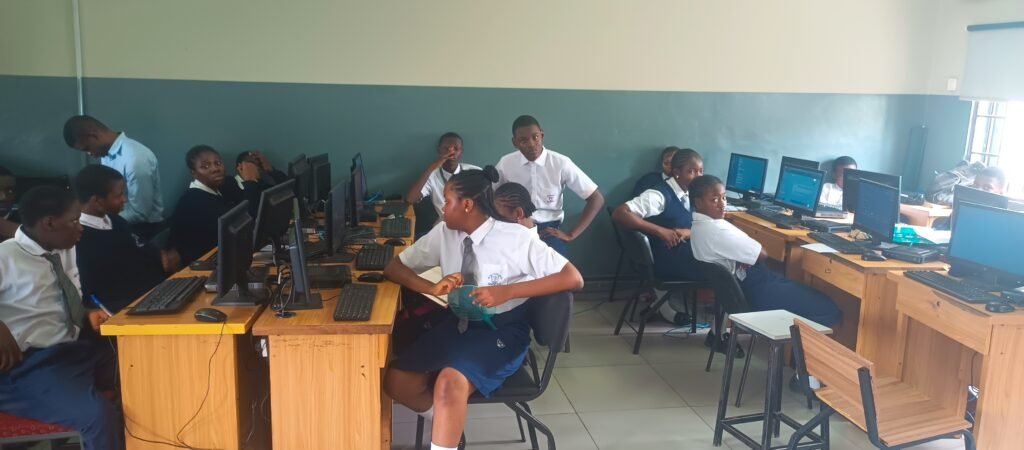
On July 22, 2026, we hosted an Artificial Intelligence (AI) Literacy Outreach at The Vale College, situated in Iyaganku GRA, Ibadan, Oyo State, Nigeria. Capitalizing on the institution’s robust technological infrastructure, our mission was to advance beyond basic computer literacy toward functional mastery of emerging tools, equipping 60 secondary school students to responsibly navigate generative AI.
Key Highlights
- Understanding AI: Supported by access to over 30 functional desktop computers, we explored what AI is and how it works, advancing SDG 4 (Quality Education) and SDG 9 (Industry, Innovation, and Infrastructure).
- Prompt Engineering: Students mastered a structured 5-point framework: clearly stating what they want, providing context, specifying output formats (such as matrices or executive summaries), giving examples, and refining prompts if necessary.
- Responsible Innovation: We used storytelling to unpack the principles of responsible AI, directly addressing AI bias and deepfakes.
- Practical Lab & Critique: Interfacing directly with generative models via desktop browsers, students brainstormed actionable solutions to immediate school issues like bullying and littering, while analyzing AI-generated outputs and flagged image hallucinations to reinforce human oversight.
Impact & Survey Outcomes
Evaluating a representative sample of 18 students (n = 18) through a post-training assessment quiz and evaluation survey demonstrated high performance and engagement:
- Strong Satisfaction & Operational Comfort: 88.89% of surveyed students expressed overall satisfaction with the experience, reported feeling comfortable operating AI systems, and committed personal time to further mastering AI tools.
- High Future Outlook & Academic Value: 94.44% agreed that applying AI tools will make their academic learning experience more engaging and enjoyable, 92.49% expressed excitement about AI’s potential to shape future industries, and 83.33% rated the content as directly useful.
Qualitative Student Feedback
“We have been taught what AI is in class but have not really been shown how to use it, especially the prompt engineering part. It is good to know that AI is like a buddy and will not replace humans.”
Key Operational Insight
In contrast to resource-constrained environments, high baseline digital skills and the availability of 30+ desktop computers enabled seamless batch rotations and maximized hands-on practice. Both male and female students displayed equal proficiency and confidence with the hardware and AI platforms, demonstrating strong gender parity and eliminating technical friction during practical exercises.