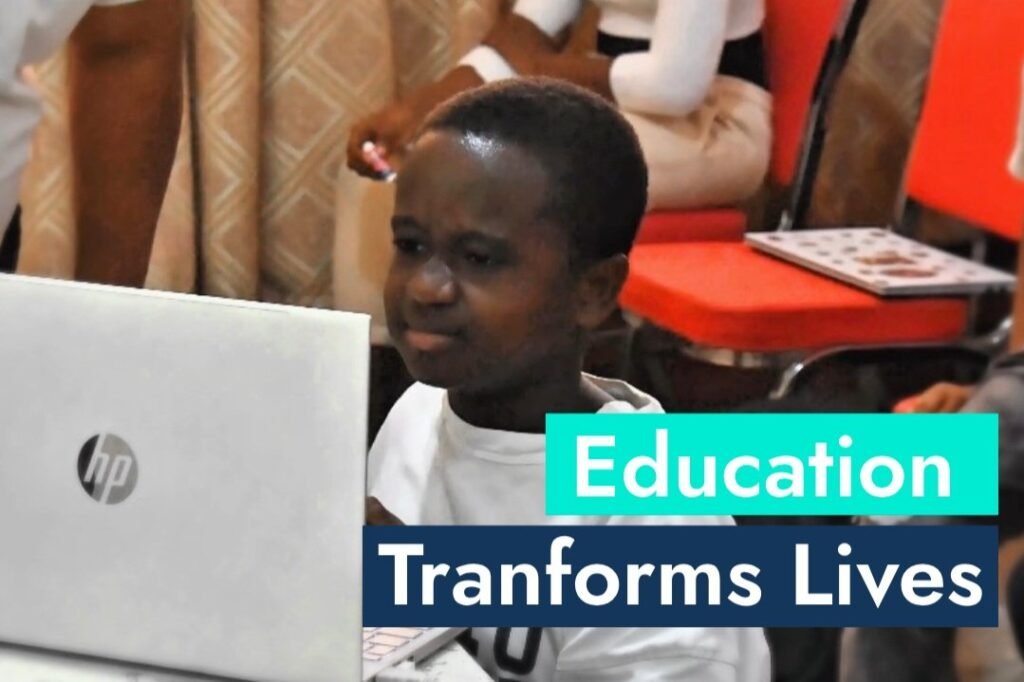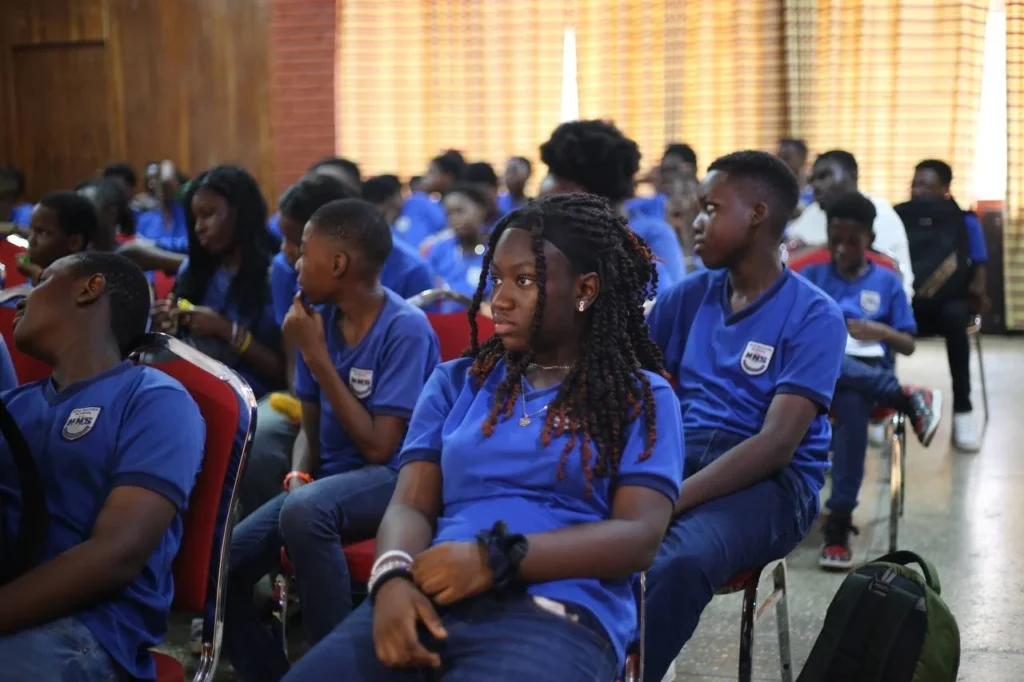
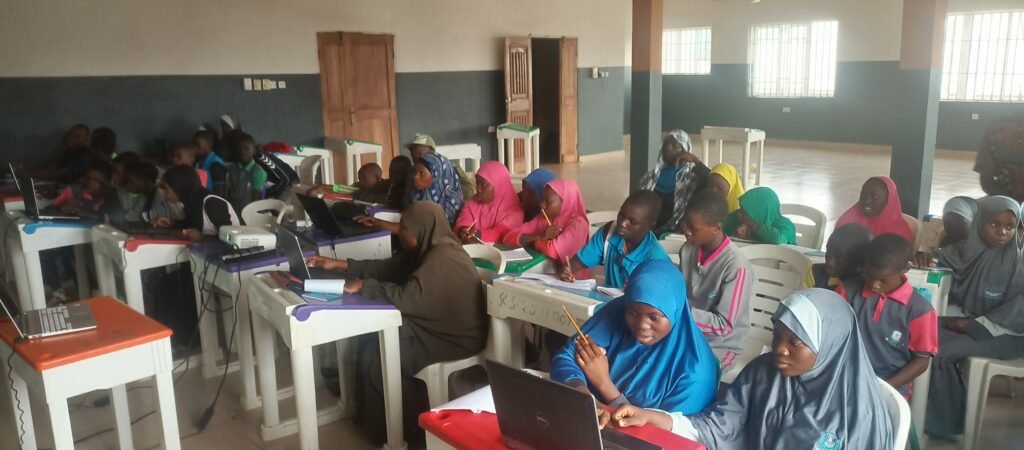
On July 23, 2026, we brought our interactive AI Literacy Outreach to 70 secondary school students at Mariny Schools, located in the Soka area of Ibadan, Oyo State, Nigeria. Designed to leverage the school’s active digital environment while navigating resource constraints, our mission was to bridge theoretical knowledge and applied digital agency by equipping students with practical prompt engineering skills, responsible AI principles, and problem-solving techniques.
Key Highlights & Core Curriculum
AI Fundamentals: We explained what Artificial Intelligence is and how it works, directly supporting SDG 4 (Quality Education) and SDG 9 (Industry, Innovation, and Infrastructure).
- Prompt Engineering: Students learned a systematic 5-step framework: clearly stating the objective, providing context, defining desired output formats (e.g., summary tables, step-by-step guides), giving examples, and refining prompts if needed.
- Responsible Use: Interactive discussions examined information verification, privacy protections, bias, and the risks of digital misinformation.
- Practical Lab & Critique: Utilizing organized laptop rotations, students created custom revision aids and practice quizzes for their exams, while also running fact-checking drills on generated stories to spot errors and internalize the necessity of human oversight.
Impact & Survey Outcomes
Evaluating a representative sample of 25 students (n = 25) through post-outreach assessment forms revealed unanimous satisfaction and engagement:
- 100% Satisfaction & Operational Comfort: 100% of surveyed students expressed overall session satisfaction, reported feeling fully confident operating AI tools, rated the curriculum usefulness as 100%, and affirmed a personal commitment to spending additional time mastering generative AI.
- 100% Future Outlook & Academic Value: 100% of participants expressed strong excitement regarding the transformative potential of AI across global industries and agreed that integrating AI tools makes their learning process will make it engaging and enjoyable.
Qualitative Student Feedback
“I learned a lot today, especially prompt engineering. After practicing, I think I will use it more with my homework and to help me understand hard topics!”
Key Operational Insight
While the school faced hardware limitations with only 10 operational laptops available, an adaptive rotation model allowed all 70 students equitable, hands-on keyboard time. Students demonstrated solid foundational familiarity with modern devices, and both male and female participants displayed equal proficiency, confidence, and engagement without any visible gender digital divide.